
 By
https://www.topexauto.com/
Truck Engine Replacement Planning: How Fleet Operators Can Reduce Vehicle Downtime
When a commercial truck develops a serious engine problem, the immediate concern is often the repair bill. For a transport business, however, the greater challenge can be how long the vehicle remains unavailable.
Missed deliveries, replacement vehicle hire, disrupted driver schedules and workshop delays can all add to the financial impact.
This is why engine replacement decisions should be treated as an operational planning exercise rather than simply a parts purchase.
For many fleet operators, a suitable used replacement engine can offer a practical route back into service, provided compatibility, installation requirements and overall costs are properly considered.
Start with a clear diagnosis
Before deciding whether to repair or replace an engine, operators need to understand the original fault.
An engine suffering from an external component failure may not require complete replacement. Equally, significant internal damage could make extensive rebuilding uneconomical.
A qualified workshop should assess the problem and establish whether the damage affects the engine assembly itself or a related system.
This distinction matters because replacing an entire engine without confirming the underlying cause can lead to unnecessary expense.
For example, cooling-system failures, lubrication problems or associated component faults may need attention regardless of whether a replacement engine is fitted.
Compare the complete cost, not just the engine price
The advertised price of a replacement engine is only part of the overall calculation.
Fleet managers should also consider removal and installation labour, transport, consumables, replacement seals, fluids and any additional components required.
Workshop availability is another important factor.
An apparently inexpensive solution may become less attractive if sourcing the correct parts or resolving compatibility problems significantly delays installation.
When researching Used Truck Engines, operators should therefore consider the complete project cost alongside the condition and specification of the replacement unit.
The objective is to restore dependable vehicle operation without creating unnecessary delays.
Engine identification is essential
Modern commercial vehicle engines can vary considerably, even within the same manufacturer’s range.
Engine codes, emissions specifications, electronic control systems, ancillary components and mounting arrangements may differ between production years and vehicle configurations.
This means that two engines with a similar capacity or appearance are not necessarily suitable replacements for one another.
Operators should record the original engine code, vehicle identification details and relevant part references before contacting a supplier.
It is also useful to establish which components are included with the replacement engine.
An engine supplied as a complete assembly may differ from one offered without certain ancillaries or electronic components.
Clear information at the enquiry stage helps workshops assess the installation work more accurately.
Consider the needs of the wider fleet
Engine replacement planning becomes particularly important for businesses operating several similar vehicles.
Maintaining accurate records of engine models, service histories and previous replacements can simplify future maintenance decisions.
It also allows operators to identify frequently required parts and assess whether a particular vehicle should remain in service.
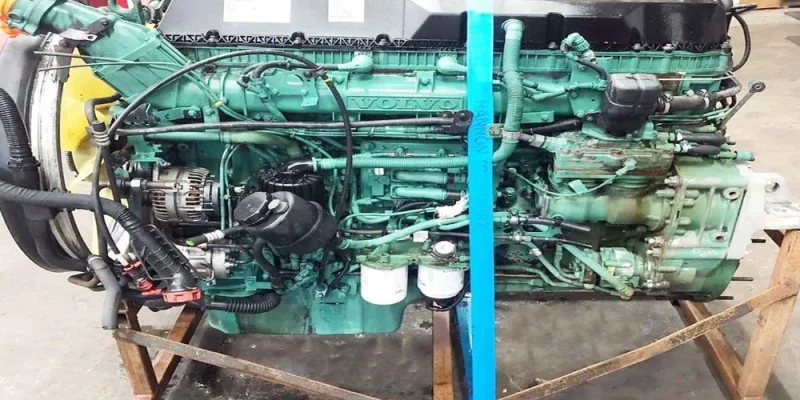
For businesses operating Volvo commercial vehicles, researching suitable Volvo Truck Engines can form part of that planning process.
The correct engine should always be confirmed against the vehicle’s technical requirements rather than assumed suitable because it comes from the same manufacturer.
Prepare the workshop before the engine arrives
One avoidable cause of downtime is discovering that essential components or installation materials are missing after a replacement engine has arrived.
A workshop can reduce this risk by confirming the required ancillaries, checking installation procedures and preparing replacement consumables in advance.
Where appropriate, it should also investigate whether the original engine failure damaged connected systems.
Cooling circuits, lubrication arrangements and other related components may require inspection.
A properly planned installation should include the necessary checks and testing before the vehicle returns to commercial operation.
Work with a specialist commercial vehicle parts supplier
M W Truck Parts supplies used commercial vehicle components to customers looking for replacement engines and other truck parts.
The team can assist with enquiries about available engines and the information needed to assess suitability.
For operators, providing clear vehicle details and explaining the required engine configuration can help make the sourcing process more efficient.
Replacing an engine is a significant maintenance decision. A sensible approach considers technical compatibility, workshop preparation and the overall cost of returning the vehicle to service.
With careful planning, operators can make better-informed choices and minimise avoidable disruption.
Frequently Asked Questions
Is a used truck engine a practical alternative to rebuilding the original?
It can be, particularly where the original engine has extensive damage or rebuilding would involve significant labour and replacement components. The decision should consider engine condition, compatibility, installation costs and the vehicle’s remaining commercial value.
What details should I provide when enquiring about a used truck engine?
The vehicle manufacturer, model, year, VIN, engine code and any relevant part numbers are helpful. It is also worth explaining whether you need a complete engine assembly or a particular configuration with specific ancillary components.
How can fleet operators reduce downtime during an engine replacement?
Confirm the diagnosis, identify the correct replacement, prepare the workshop and establish which additional parts are required before installation begins. Checking associated systems and following the manufacturer’s installation procedures can also reduce avoidable delays.
Contact M W Truck Parts
For enquiries about used truck engines, Volvo engine assemblies and other replacement commercial vehicle parts, contact:
M.W. Direct Trading LTD t/a M W Truck Parts
Telephone: +44 (0)1262 601600
Email: sales@mwtruckparts.co.uk
Website: https://mwtruckparts.co.uk/





Comments