
 By
By 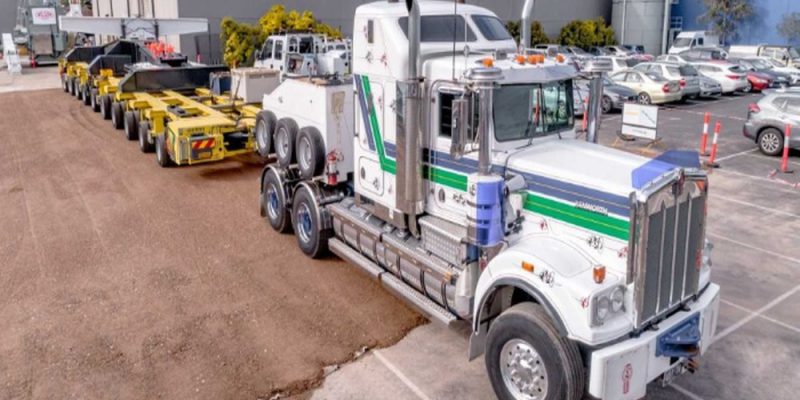
At a Glance:
- Heavy haulage enables infrastructure projects that standard freight cannot support.
- Industrial growth relies on safe, predictable transport of large equipment.
- Regional development depends on heavy haulage to overcome access constraints.
- Compliant heavy haulage plays a key role in protecting investment and long-term economic value.
Large-scale economic development projects involve transporting assets that exceed the limits of conventional freight transport. Infrastructure projects, industrial facilities and energy networks depend on oversized equipment and components arriving safely and on schedule. When these assets cannot move efficiently, project timelines, costs and delivery certainty are affected.
Heavy haulage is a specialised transport function designed for oversized, overweight and high-risk loads. Beyond standard freight movement, it provides the planning, controls and approvals required to move complex assets through constrained networks.
It supports investment certainty by reducing transport-related constraints that affect project delivery and ongoing productivity across industries.
This article delves into how heavy haulage contributes directly to economic growth and long-term development.
Delivery of Major Infrastructure and Capital Projects
Many infrastructure projects require specialised assets beyond the capabilities of standard freight. Assets such as bridge sections, precast components, transformers and large plant equipment must arrive on site intact and on a carefully coordinated schedule.
Heavy haulage plays a critical role in ensuring movement aligns with site access limits, design tolerances and regulatory requirements. Without heavy haulage, many capital projects face significant constraints during delivery planning and execution.
Additionally, transport corridors, ports, energy systems and public works depend on large-scale infrastructure delivery. Effective capital project logistics ensure assets arrive in line with site readiness and construction sequencing. This helps prevent delays, rework and rising costs.
Industrial Expansion and Productivity Gains
Industrial growth in mining, manufacturing, energy and processing relies on the safe movement of large equipment. Transporting industrial equipment enables facilities to expand, upgrade technology and replace ageing assets with minimal operational disruption. Heavy haulage plays a key role by managing transport and installation risks through controlled movement and planning.
Logistics for manufacturing expansion benefit from reliable delivery and careful handling. When equipment arrives on time, commissioning accelerates and production begins sooner. By reducing disruption across industrial logistics chains, reliable transport improves productivity and allows you to plan output with greater certainty.
Regional and Remote Economic Access
Development in regional and remote areas often depends on assets beyond the capacity of local road networks. Heavy haulage enables access to these locations through specialised planning and equipment. It also requires the necessary regulatory approvals to address challenges like narrow roads, low bridges and weight limits. Many regional projects face significant delivery constraints without this capability.
This access is vital for mining and energy infrastructure, renewable projects and regional industrial centres. Heavy haulage not only facilitates workforce mobilisation but also ensures essential equipment arrives as scheduled.
Over time, this capability encourages sustained investment in these regions, rather than merely temporary, project-based efforts.
Investment Protection Through Compliance and Risk Control
Because heavy haulage operates under strict regulatory requirements, it reduces the risk of damage to public infrastructure. This minimises unplanned costs through permit compliance, route controls and safety management. Compliant heavy transport enables projects to progress without damaging the assets that support the broader economy.
Likewise, early planning of heavy haulage is central to risk control. Identifying constraints early allows routes, schedules and equipment choices to be improved before problems occur. As a result, this approach stabilises budgets and timelines, boosting investor confidence.
Long-Term Economic Value Across Supply Chains
Heavy haulage functions as an economic enabler rather than a standalone transport cost. From construction and energy to manufacturing and logistics, a single transport task supports multiple downstream industries. By enabling assets to reach their operational destination, heavy haulage supports long-term productivity.
For example, the transport of major energy equipment does more than complete a single delivery. It supports power generation, industrial precincts and stable supply chains that depend on reliable energy access. These downstream benefits reinforce the role of heavy haulage in supporting long-term economic development.
Heavy haulage supports economic development by enabling the movement of high-stakes assets and equipment to project locations essential to infrastructure, industry and regional growth. By effectively managing compliance, timing and risk, heavy haulage protects investments and helps maintain long-term economic value throughout supply chains.
Working with an experienced heavy haulage provider helps manage complex transport requirements more effectively. The right expertise ensures critical assets move safely and provides projects the certainty they need to support long-term economic growth.

Comments